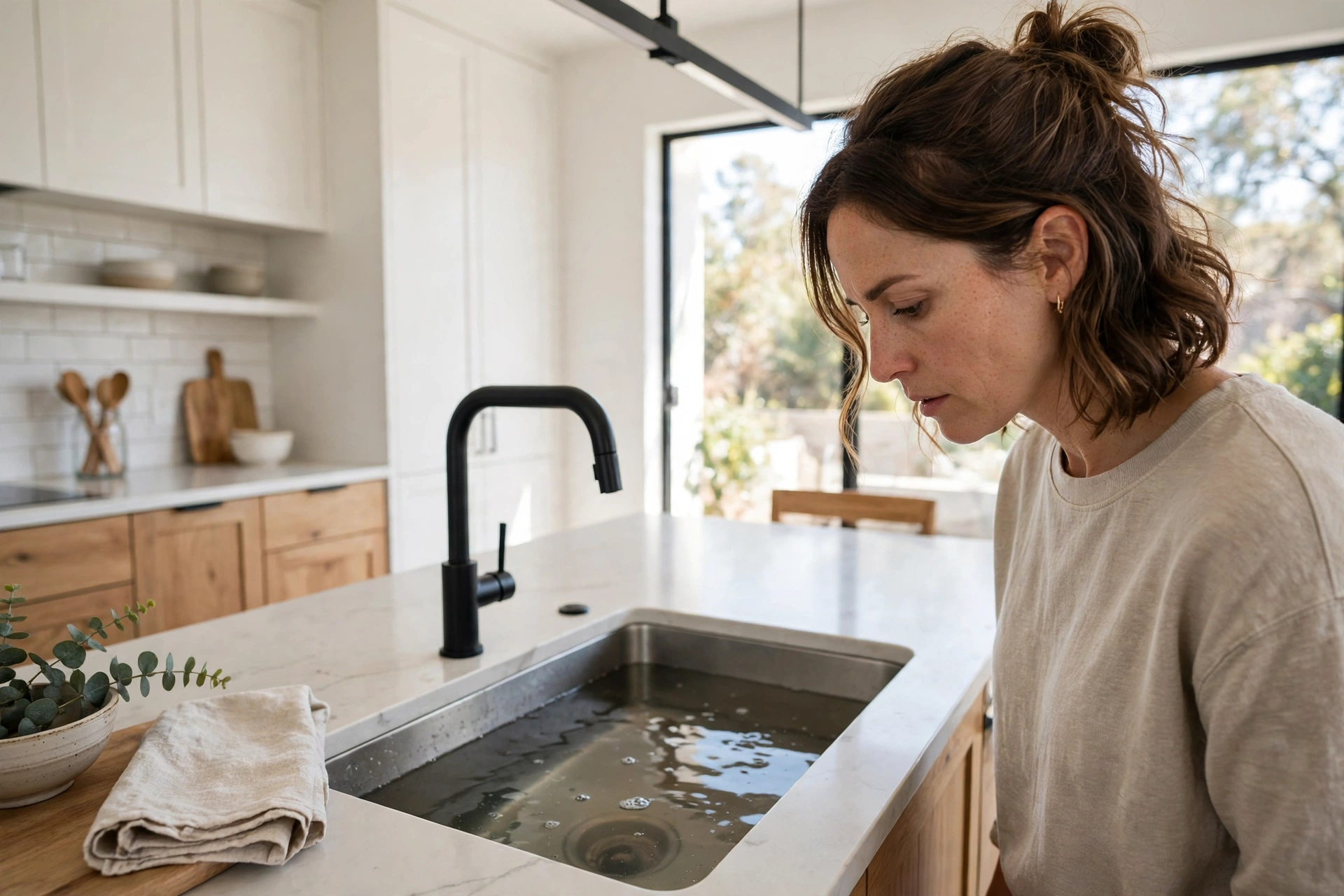
What to Do When Your Kitchen Sink Will Not Drain
A kitchen sink that will not drain stops the whole kitchen. These are the checks to run first, in the order a technician follows them, and the point where the job needs a visit.
Read More →Beaumont · Riverside County, CA
A kitchen sink that will not drain, backs up on both sides, or drains slowly through the day is a clog that needs clearing. Describe the problem and get a clear plan for getting the sink draining again.
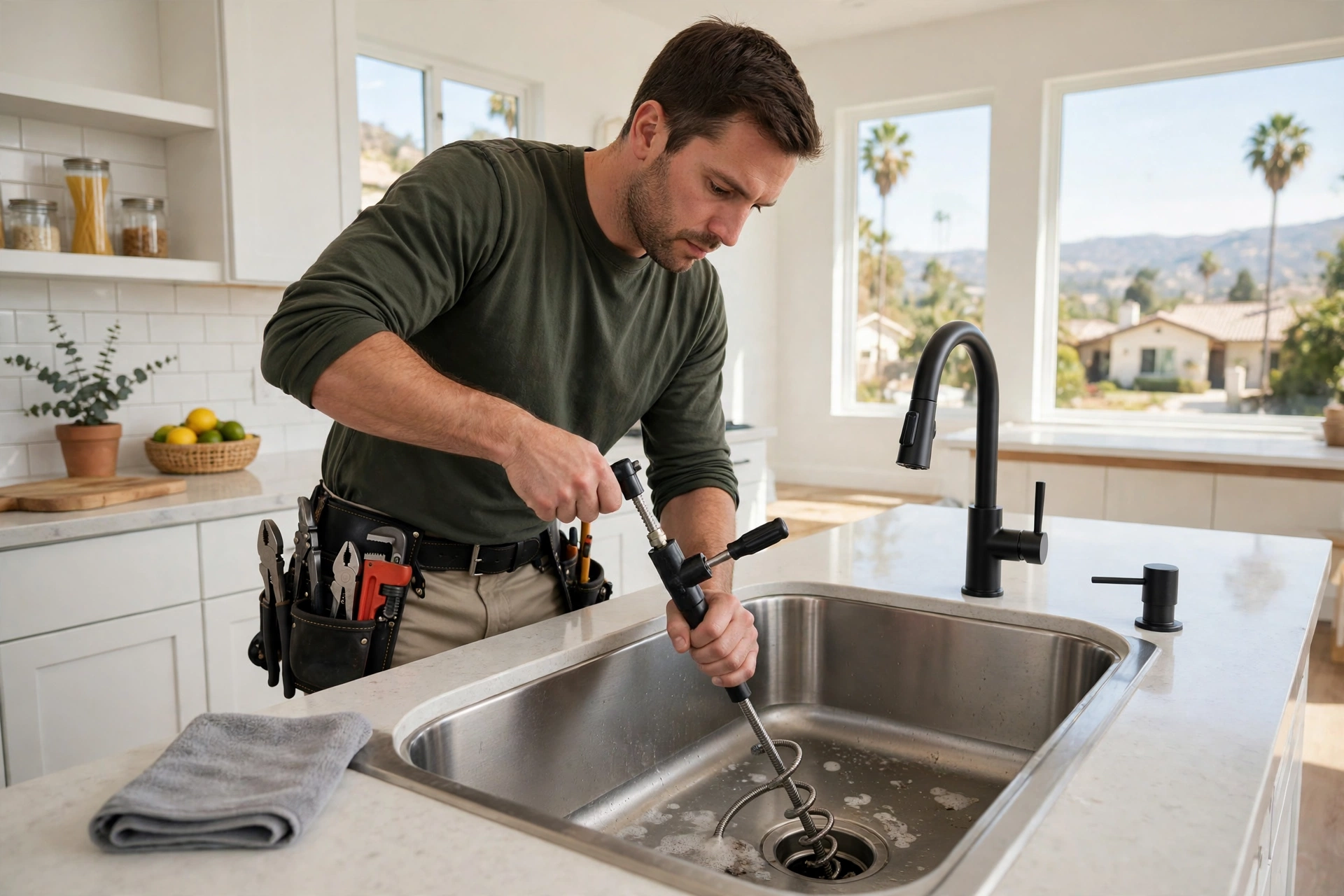
Beaumont sits in the San Gorgonio Pass in Riverside County, where the population grew from 36,877 in 2010 to 53,036 in the 2020 Census. That growth filled whole new neighbourhoods with kitchens that see daily use: cooking, washing up, running the disposal, and rinsing plates after every meal. A kitchen sink in Beaumont works hard, and when its drain slows or stops, the whole kitchen stops with it. Dishes pile up, water stands in the basin, and the smell from a drain that is not clearing can spread through the house.
Most kitchen sink clogs start the same way. Grease washed down the drain cools and hardens on the pipe walls. Food scraps, coffee grounds, and soap residue add layer after layer until water can only pass slowly, or not at all. Beaumont water comes from the Beaumont-Cherry Valley Water District, with imports through the San Gorgonio Pass Water Agency, and water in the Pass runs mineral-heavy, so scale adds to the buildup inside older pipes. The sections below follow the problem first, then the cause, then the fix, so a homeowner can tell what kind of clog they have before they call.
A kitchen sink that is not draining at all usually has a clog close to the sink: in the trap under the basin, in the disposal, or in the first stretch of drain pipe past the wall. Start by looking at what the water does. If it stands in the basin and does not move, the blockage is complete. If it drains very slowly, the pipe is narrowed but not fully closed. If it drains, then rises again when the disposal runs, the clog sits past the disposal connection.
Before calling, note three details. First, whether one side or both sides of a double sink are affected. Second, whether the water level changes when another fixture runs. Third, whether the disposal hums, turns, or does nothing at all. Those three facts tell a technician where the clog sits: at the sink, past the sink, or in a shared drain line. Write them down before you call, because they shape the visit.
Do not keep running the tap while the sink is full. More water only raises the level in the basin and can push water into the cabinet below. Bail the standing water into a bucket, clear what you can reach from the basin, and leave the drain alone until the clog is found. A plunger can help a soft clog near the trap, but forcing water through a hard clog with a plunger can push the blockage further down the pipe, where it is harder to reach. Call Beaumont Kitchen Sink Pros at (951) 555-0100 and describe what the sink is doing, and we will connect you with an available local crew right away.
A double-basin kitchen sink with both sides backed up is telling you where the clog is. Each side of the sink has its own drain down to a shared pipe, so when one side drains and the other does not, the clog is in the one side. When both sides back up together, the clog sits past the point where the two sides join, in the shared drain line. That distinction matters, because a clog in the shared line will not clear with a plunger on one basin.
A clog past the kitchen sink can also show up away from the sink. Water may rise in the sink when the dishwasher runs, because the dishwasher drains through the same line. The sink may gurgle when a toilet flushes, or drain slowly after a shower, because the fixtures share a drain that is partly blocked. Callers often describe the same pattern in different words: the sink is backed up, the drain is slow, and the water comes back up when another fixture is used. All of it points to the same place: a blockage past the sink itself.
Clearing a clog past the sink usually takes a cable run through the drain line, or a camera look inside the pipe to find where the blockage sits. A cable clears the clog and restores flow, and a camera shows whether grease, food waste, or a damaged pipe is the cause. If the same sink backs up again a few weeks after clearing, the cause is usually buildup left on the pipe walls, and a deeper cleaning of the line is the fix rather than another short cable run.
Grease is the main cause of kitchen sink clogs in Beaumont homes. Cooking oil, bacon fat, and butter go down the drain as liquid and cool into a solid coating on the pipe walls. Hot water from the tap melts the top layer and carries it a little further down, where it cools and hardens again. Over months and years, that coating narrows the pipe until water can only pass slowly. A sink that drains a little slower every month is usually a grease coating growing thicker, not a single sudden blockage.
Food scraps add to the grease layer. Rice and pasta swell in water and lodge in the narrowed pipe. Coffee grounds do not break down in water, so they settle and pack into a dense plug. Soap residue from washing up coats the pipe as well, and in a home with mineral-heavy water the scale gives grease and food something to grip. The result is a clog that is part grease, part food, and part scale, and it will not dissolve with hot water alone.
What goes down the drain decides how fast the clog forms. Scraping plates into the bin before washing, using a strainer in the sink, and pouring cooking grease into a container for the bin instead of the drain all slow the buildup. The disposal helps with small soft scraps, but it is not a bin: bones, fibrous vegetables, and large amounts of food belong in the bin, not the disposal. The prevention habits that keep a kitchen drain clear are covered in full on our blog, and the disposal page explains what the disposal can and cannot handle.
Water coming up in a shower or toilet when the kitchen sink runs is a sign the blockage is further down the line than the kitchen. Drains in a house join together before they leave the building, so a clog in a shared drain or in the sewer line can push water back up through the lowest fixture in the house. A shower drain is usually the lowest point, which is why water often appears there first, even when the kitchen sink is the fixture being used.
Watch for the pattern. If the kitchen sink drains slowly and the shower gurgles, or if flushing a toilet makes water rise in the shower, the clog sits in a shared drain or in the sewer line. If only the kitchen sink is slow and every other fixture drains normally, the clog is in the kitchen branch alone. That pattern is the most useful thing a homeowner can report, because it tells the technician whether to work on the kitchen line or to look further down the system.
A clog in the sewer line needs more than a short cable at the sink. It may need a longer cable run, a camera inspection to find the blockage, or a cleaning of the sewer drain itself. Tree roots, grease, and scale are the usual causes in Beaumont, where older homes along the downtown grid on 6th Street and Beaumont Avenue have older drain lines, and newer homes in the Pass have long runs to the street. The sewer drain cleaning page explains what that work involves, and the drain camera inspection page explains how a camera finds the cause.
A leak under the sink often appears at the same time as a clog, because standing water in the basin puts pressure on every joint below it. Water under the cabinet can come from the trap, the disposal connection, the supply lines, or the drain pipe where it enters the wall. The first step is to find where the water starts: dry the area, run a small amount of water, and watch which joint drips first. A leak at the trap is different from a leak at the disposal, and each needs a different fix.
A sink leaking under the cabinet can damage the cabinet floor quickly, especially if the leak has been going on unnoticed. Particleboard cabinet bases swell and soften when they stay wet, and a slow drip can soak the base before anyone sees water on the kitchen floor. If you find water under the cabinet, clear the cabinet out, mop up what you can, and put a container under the drip. Note whether the leak happens only when the sink drains, or all the time: a leak that only appears while draining points to the drain side, while a leak that never stops points to the supply side.
Some leaks start after a clog is cleared, when a joint that was disturbed during the work does not seal again. Others start on their own as washers and seals age, especially in homes with hard water, where mineral deposits wear seals faster. Either way, a leak under the sink should not be left to keep dripping while the clog is dealt with. The drain pipe repair page covers leaks and damaged pipes, including the pipe leak repair work that fixes joints and sections of pipe under the sink.
A smell from the kitchen drain usually means food and grease are sitting in the pipe and breaking down. A drain that smells when the disposal runs, or when hot water goes down, has buildup coating the pipe walls. The smell often comes with a slow drain, because the same buildup that causes the smell also narrows the pipe. Clearing the clog removes the smell with it, because the smell is the buildup, not a separate fault.
Gurgling is another early sign. When a drain gurgles as water goes down, air is trapped behind a partial blockage and escaping in bubbles. A sink that gurgles, drains slowly, and needs a second plunge every few weeks has a clog that is growing, not one that keeps returning by chance. Each time the clog is partly cleared and left in place, the pipe narrows a little more, and the next clog forms faster. A drain that has been cleared twice and clogs again is asking for a deeper cleaning of the line.
Beaumont conditions add their own part to the story. Hot dry summers and Santa Ana winds through the Pass dry out drain traps in sinks that are not used often, which lets smells rise from the drain. Mineral-heavy water leaves scale inside pipes, and scale gives grease something to grip. Older homes in the downtown grid and newer homes in the hillside communities all share the same pattern: a slow drain that is ignored becomes a backed-up sink, and a backed-up sink that is cleared halfway becomes a repeat call. The warning-signs blog post lists every early sign to watch for.
Four factors shape the work on a kitchen sink clog: where the clog sits, what it is made of, how the pipe is reached, and whether the pipe itself is damaged. A clog in the trap under the sink is a different job from a clog thirty feet down the drain line past the wall. A soft clog of grease and soap clears differently from a hard plug of coffee grounds and food, or a pipe narrowed by scale. A diagnosis finds the clog first, then the work follows from what was found.
Access shapes the work as well. A sink with a clear cabinet and a reachable trap is quicker to work on than a sink with a disposal, a filter, and stored cleaning supplies packed around the pipes. A drain line that can be reached through a cleanout outside the house is quicker to cable than one that must be reached through the roof vent or by removing the trap. Homes in Beaumont vary widely: older homes along Brookside Avenue and 2nd Street may have no cleanout at all, while newer homes in Sundance and Seneca Springs usually have one outside.
The condition of the pipe is the last factor. A pipe that is sound after the clog is cleared needs nothing more. A pipe with scale, corrosion, or a cracked joint may need a repair once the clog is out, because clearing the clog shows the damage that the clog was hiding. A camera inspection answers that question directly, by showing the inside of the pipe after the water flows again. A clear diagnosis lists the clog, the pipe condition, and the access involved, so the homeowner can see what drives the work before anything starts.
Our Services
A kitchen sink that will not drain is a small problem that turns into a big one fast — standing water, smells from the drain, and a kitchen you cannot use. Each service below covers one kind of problem, so the fix matches the clog found.
Cleaning for kitchen and household drains slowed by grease, soap, food, and scale, with the line flushed clear and tested after the work.
Learn more →Unclogging for drains that are slow, standing, or fully blocked, from a single kitchen sink to a clog past the sink in a shared line.
Learn more →Cable work that breaks through clogs deep in the drain line and restores flow, with the drain tested after the cable run.
Learn more →High-pressure water cleaning for drain lines narrowed by heavy grease and scale, used when a cable alone leaves buildup behind.
Learn more →Clearing for shower and tub drains slowed by hair and soap, and for standing water that will not drain from the tub.
Learn more →Cleaning for the sewer drain when water backs up through more than one fixture or comes up in the lowest drain in the house.
Learn more →Repair for leaking, cracked, or corroded drain pipe under the sink and beyond, including pipe leak repair on damaged sections.
Learn more →Repair for a disposal that hums but will not turn, is jammed, leaks, or will not start, with jams cleared and the unit tested.
Learn more →Help for drain faults that cannot wait: a sink backed up with water rising, sewage coming up, or a leak soaking the cabinet.
Learn more →Drain cleaning for shops, restaurants, and offices in Beaumont, planned around the building and its busiest hours.
Learn more →A camera look inside the drain to find where a clog sits, what it is made of, and whether the pipe itself is damaged.
Learn more →How It Works
Tell us what the sink is doing: standing water, slow drain, both sides backed up, gurgling, a smell, or water coming up somewhere else. Note when it started and whether other fixtures are involved.
The clog is traced through the trap, the disposal, and the drain line in order, with a cable or a camera where the blockage sits past the sink. Each check narrows the cause, so the fix matches the clog found.
The clog is cleared, the line is flushed, and the sink is run through a full drain cycle to check flow at the basin and at the other fixtures before the visit ends.
Why Call Us
Help when a kitchen sink backs up, day or night — describe the problem and get a clear plan for the visit.
Kitchen sink unclogging across Beaumont, from Cherry Valley and Sundance to Seneca Springs, Oak Valley, and Highland Springs.
The clog is found before it is cleared, so the fix targets the cause — grease, food, scale, or a damaged pipe.
Call (951) 555-0100 and we will connect you with an available local crew right away.
Slow drains, backed-up sinks, leaks under the cabinet, disposal faults, smells, and gurgling — the full kitchen drain, covered.
Drain work shaped by Beaumont conditions: mineral-heavy water, hard dry summers, and homes from the downtown grid to the hillside communities.
Areas Served
Kitchen sink unclogging across Beaumont, in the single ZIP code 92223 — from Cherry Valley and Sundance to Seneca Springs, Oak Valley, and Highland Springs.
Common Questions
The clog is usually in the trap under the sink, in the disposal, or in the first stretch of drain pipe past the wall. If both sides of a double sink are backed up, the clog sits past the point where the two sides join, in the shared drain line.
When both sides back up together, the clog is in the shared drain line past the sink, not in one basin. A plunger on one side will not clear it, because the blockage sits where the two sides meet and beyond.
Grease is the main cause: cooking oil and fat cool and harden on pipe walls. Food scraps, coffee grounds, and soap residue add to the layer, and mineral-heavy water in the Pass leaves scale that gives grease something to grip.
The drains join together before they leave the house, so a clog in a shared drain or in the sewer line can push water back up through the lowest fixture, usually the shower. That pattern points to a blockage further down the line than the kitchen.
Food and grease sitting in the pipe break down and give off a smell, and the smell usually comes with a slow drain because the same buildup narrows the pipe. Clearing the clog removes the smell with it.
Stop running the tap, bail standing water into a bucket, and note whether one side or both sides are affected, whether other fixtures are involved, and what the disposal does. Those details tell the technician where the clog sits.
Where the clog sits, what it is made of, how the pipe is reached, and whether the pipe itself is damaged. A diagnosis finds the clog first, so the work follows from what was found rather than from a guess.
From the Blog
A kitchen sink that will not drain stops the whole kitchen. These are the checks to run first, in the order a technician follows them, and the point where the job needs a visit.
Read More →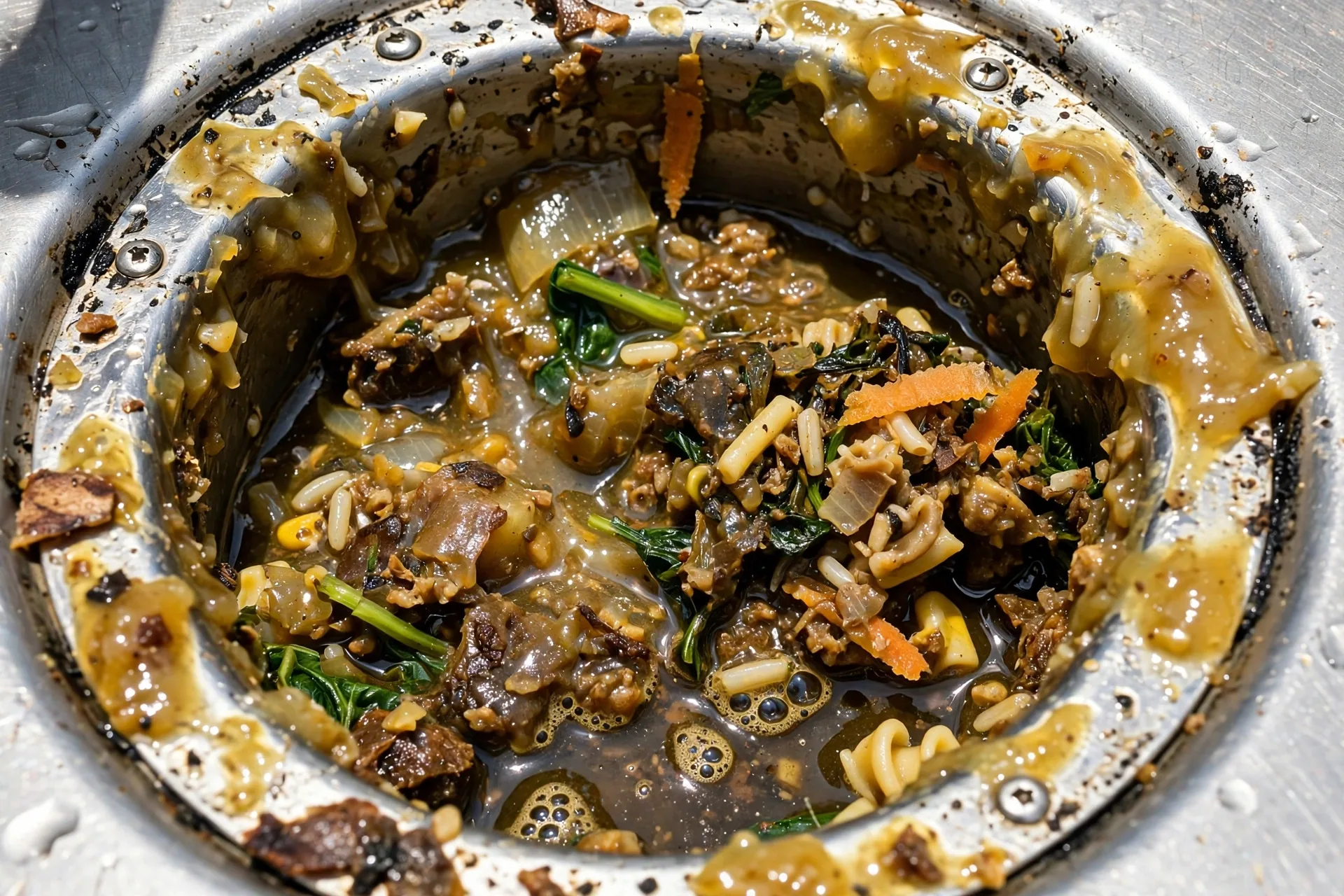
Grease is the main cause of kitchen sink clogs in Beaumont, but it is not the only one. Food, coffee grounds, soap, and mineral scale each add their own layer to the pipe, and the clog is usually a mix of all of them.
Read More →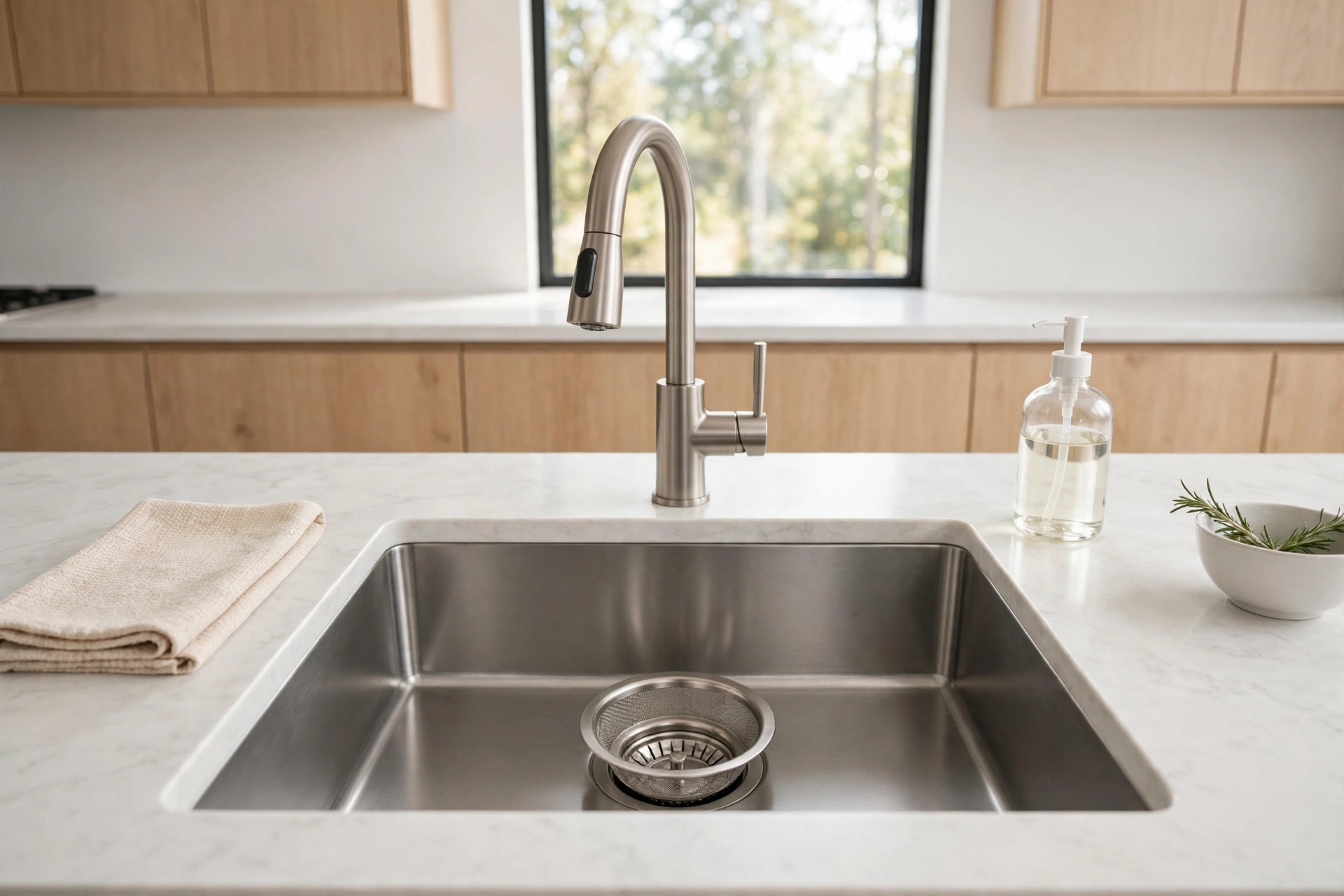
A kitchen sink clog is easier to prevent than to clear. The habits in this guide take a few seconds each, and together they keep a drain clear for far longer than any one of them alone.
Read More →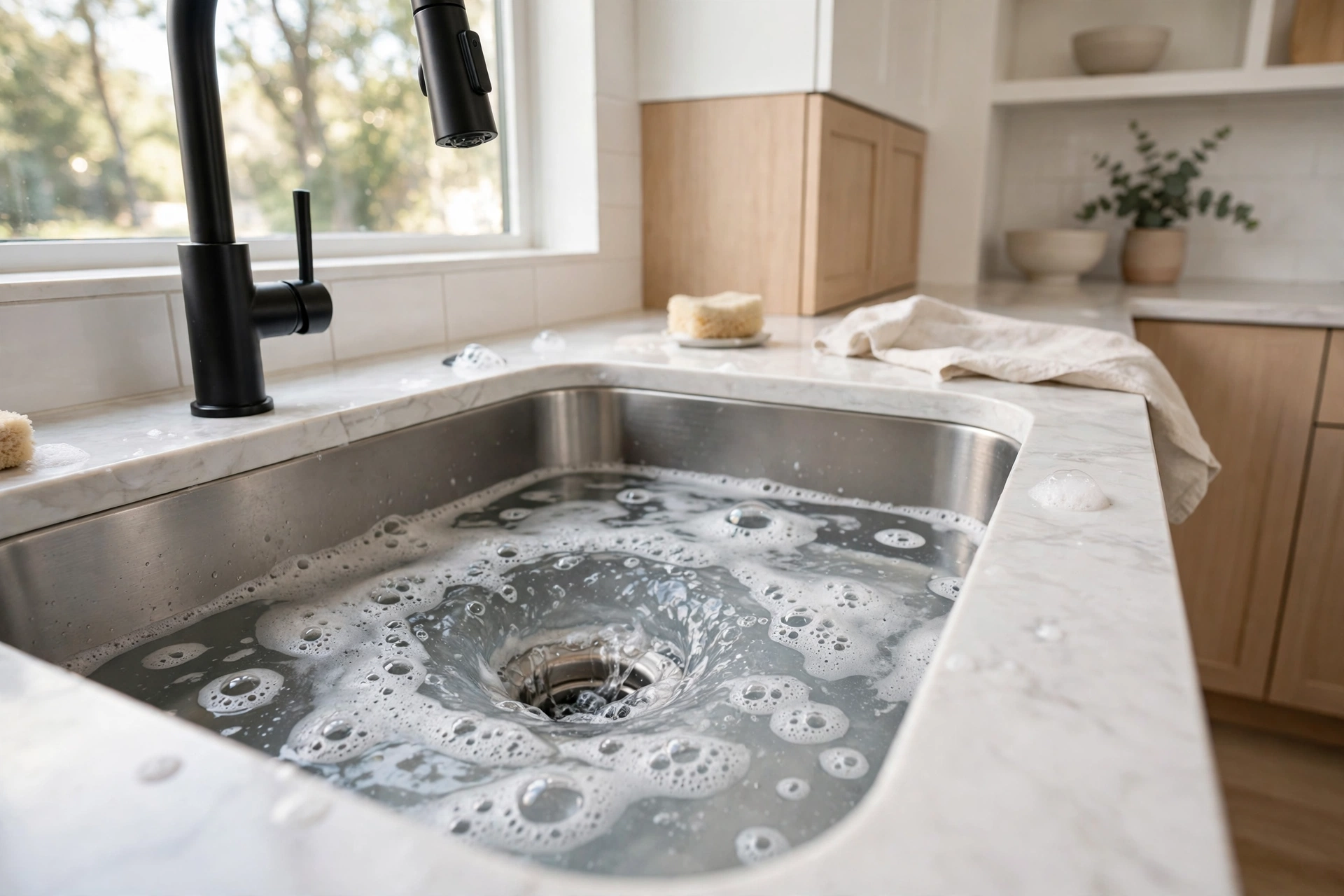
A kitchen drain rarely stops without warning. Slow draining, gurgling, smells, and recurring clogs are the signs that a blockage is forming, and each one points to a different stage of the clog.
Read More →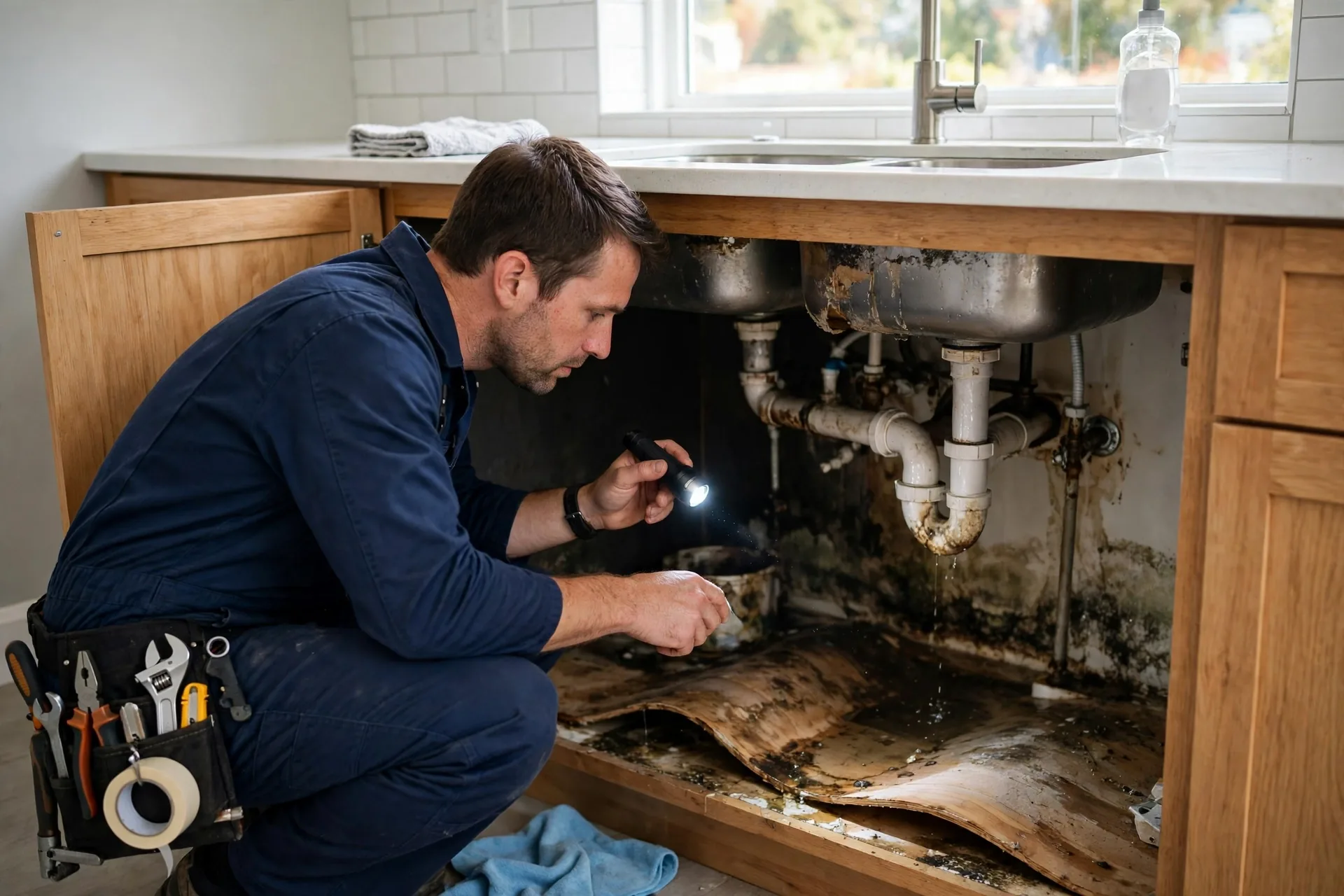
Drain cleaning is usually maintenance, and maintenance is usually not covered by a homeowners policy. Sudden damage from a drain fault is a different question, and the answer sits in the wording of the policy, not in the drain.
Read More →Call and describe the clog — standing water, a slow drain, or a disposal that will not turn — and get a clear plan for getting it flowing again.
Call (951) 555-0100