Beaumont, CA • Drain Camera Inspection
Drain Camera Inspection in Beaumont, CA
A camera look inside the drain shows what a cable can only guess at: where the clog sits, what it is made of, and whether the pipe itself is damaged. We run camera inspections in Beaumont for drains that keep clogging and for clogs that a cable cannot clear.
24/7 emergency line • Local Beaumont coverage • Clear diagnosis first
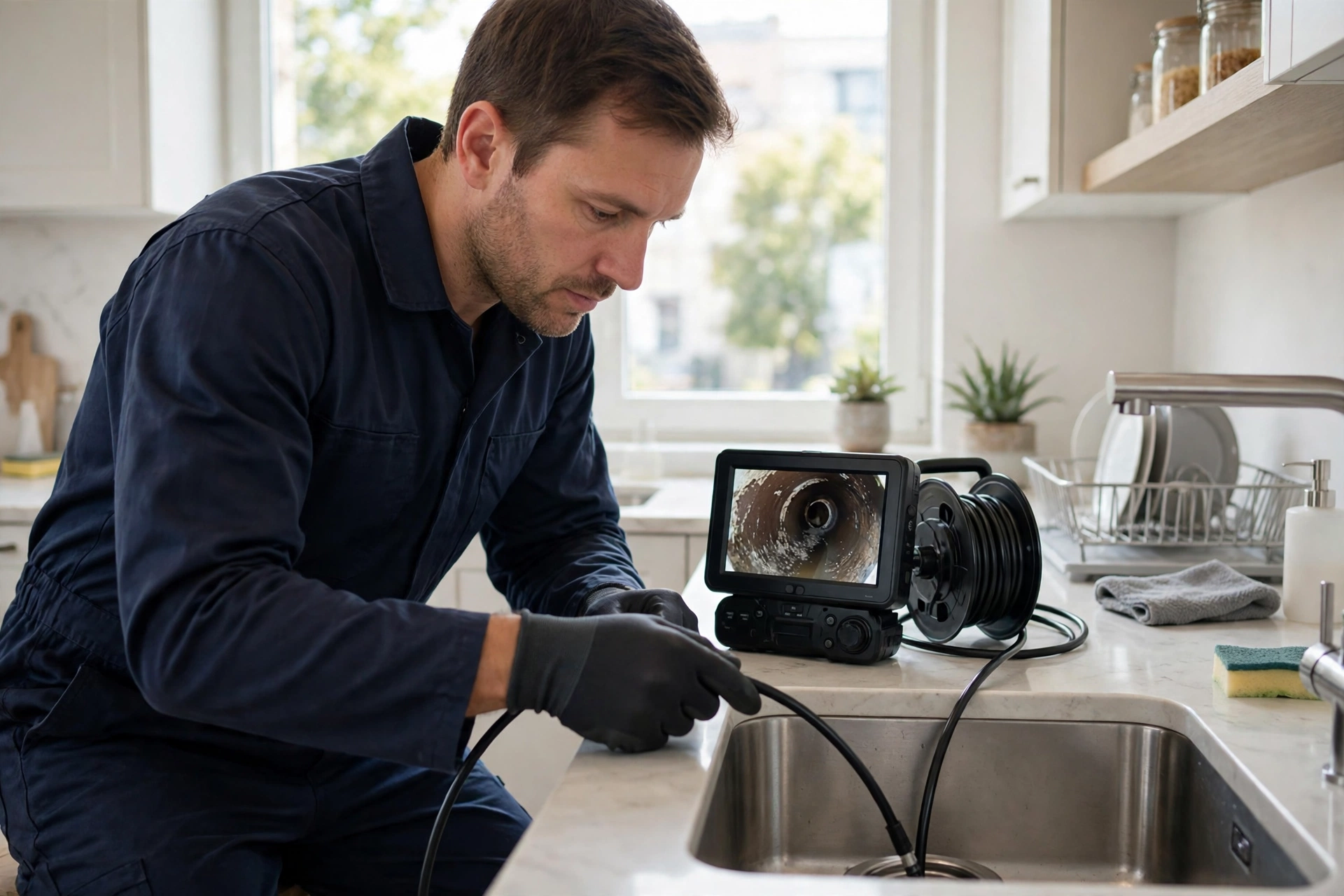
Drain camera inspection is the work of feeding a small camera on a flexible line into a drain pipe and watching the inside of the pipe on a screen as the camera moves through it. The camera shows the pipe walls, the joints, the clog, and any damage, in plain sight. It turns a guess about what is wrong inside a pipe into something that can be seen, and the repair is planned from what the camera shows rather than from what the symptoms suggest.
A camera inspection is used when the drain keeps clogging, when a cable cannot clear the clog, or when the clog is in a place that cannot be reached from a fixture. A drain that has been cleared twice and clogs again in the same place is asking for a camera, because the clog is forming at a point in the pipe, and the camera will show what is at that point. A clogged kitchen drain with a camera inspection is a call we see in Beaumont, and the camera is what ends the repeat visits.
What a Camera Shows Inside a Drain
A camera shows the inside of the pipe as it is: the walls, the joints, and anything sitting in the line. Grease appears as a coating on the walls, narrowing the pipe. Scale appears as a rough, hard layer. A foreign object appears as a shape that does not belong in the pipe. A crack appears as a dark line across the wall, and a shifted joint appears as a step where one section of pipe no longer lines up with the next.
The camera also shows where the clog sits, measured from the access point, so the repair can be planned at the right place rather than by digging or opening walls to look. A clog ten feet down the line from a cleanout is a different job from a clog under the floor, and the camera gives the distance. The camera records the run too, so the homeowner can see what the technician saw, and the record is there for the next visit if the drain acts up again.
Clogged Kitchen Drain With a Camera Inspection
A clogged kitchen drain with a camera inspection is the right call when the sink has been cleared more than once and keeps clogging. The camera goes in after the line is cabled open, so the camera can move through the pipe and show the walls. What it usually finds in a Beaumont kitchen line is a thick grease coating along the length of the line, with scale underneath it from mineral-heavy water, and the coating is the reason the drain keeps clogging.
The camera also finds the things a cable cannot report clearly: a section of pipe that has cracked, a joint that has shifted and created a lip that catches food, or an object that fell down the drain and lodged in the line. Each one needs a different fix, and the camera is what separates them. A grease coating needs jetting. A cracked section needs a repair. An object needs to be pulled out. Without the camera, all three look the same from the sink: a drain that will not stay clear.
A camera inspection on a kitchen drain is also the check after a jetting clean. The camera goes back in after the jetting to show the walls clean, with the grease and scale gone and the joints sound. A line that looks clean on camera and still drains slowly has a problem past the inspected section, and the camera run continues to the next part of the line. Call Beaumont Kitchen Sink Pros at (951) 555-0100 and describe how often the drain has clogged, and we will connect you with an available local crew right away.
Finding the Clog and the Cause Together
A camera inspection finds two things at once: the clog and the cause of the clog. The clog is the blockage that stops the water. The cause is the reason the blockage formed there: a grease coating, a damaged joint, a settled section, or an object in the line. Clearing the clog without finding the cause only resets the cycle, and the drain clogs again in the same place. The camera finds both, so the fix addresses the cause rather than only the clog.
The cause is often further down the line than the clog. A kitchen sink that clogs at the trap may have a cause thirty feet down the line, where the pipe has settled and holds water. A shower that clogs at the drain may have a cause in the shared line, where roots have entered through a crack. The camera run follows the line from the access point to the street, so the cause is found wherever it sits, not only where the water stops.
After the Inspection: What Happens Next
After the inspection, the next step follows from what the camera showed. A line with a grease coating needs a jetting clean. A line with a single clog and sound walls needs a cable run and a flow test. A line with a cracked section or a shifted joint needs a repair to that section. A line with a settled section that holds water needs the section corrected. Each one is a different job, and the camera is what decides which one the drain needs.
The inspection itself does not clear the clog. The camera shows the problem, and the clearing or the repair follows in the same visit where possible, or is planned from the recording where the work needs more time. A camera inspection that ends with a clear picture and a plain-words plan has done its job, even when the repair itself takes a second visit.
What a Drain Camera Inspection Covers
- Camera run from the access point through the clogged section.
- Pipe walls, joints, and clog shown on screen as the camera moves.
- Clog located by distance from the access point.
- Cause found with the clog: grease, scale, roots, object, or damage.
- Recording kept for the next visit if the drain acts up again.
- Plain-words plan for the clearing or repair that follows.
Frequently Asked Questions
What is a drain camera inspection?
A small camera on a flexible line is fed into the drain pipe, and the inside of the pipe is watched on a screen as the camera moves through it. The camera shows the pipe walls, the joints, the clog, and any damage, in plain sight.
When does a drain need a camera inspection?
When the drain keeps clogging after being cleared, when a cable cannot clear the clog, or when the clog sits in a place that cannot be reached from a fixture. A drain cleared twice that clogs again in the same place is asking for a camera.
Can a camera find what is causing my kitchen drain to clog?
Yes. A clogged kitchen drain with a camera inspection usually shows a thick grease coating along the line, scale underneath it, or a cracked section or shifted joint that catches food. Each one needs a different fix, and the camera separates them.
Does a camera inspection clear the clog?
No. The camera shows the problem, and the clearing or the repair follows in the same visit where possible. A camera inspection that ends with a clear picture and a plain-words plan has done its job.
What if the camera finds a damaged pipe?
The job changes from clearing to repair. The camera shows where the damage sits and how far it spreads, and the drain pipe repair page covers the work of fixing a cracked, corroded, or shifted section.
Will I see what the camera sees?
Yes. The camera run is watched on a screen during the visit, and the recording is there for the next visit if the drain acts up again, so the next technician starts from what was already found.
Kitchen Sink Unclogging in These Beaumont Neighborhoods
This service is available across Beaumont, including:
- Kitchen Sink Unclogging in Fairway Canyon, Beaumont, CA
- Kitchen Sink Unclogging in Seneca Springs, Beaumont, CA
- Kitchen Sink Unclogging in Oak Valley, Beaumont, CA
- Kitchen Sink Unclogging in Highland Springs, Beaumont, CA
Related Services
From the Blog
What to Do When Your Kitchen Sink Will Not Drain
Call (951) 555-0100 and we'll connect you with an available local crew right away.
Sink Not Draining in Beaumont?
Describe the clog — standing water, a slow drain, or a disposal that will not turn — and get a clear plan for getting it flowing again.
Call (951) 555-0100