Beaumont, CA • Blog
Warning Signs Your Kitchen Drain Is About to Clog
A kitchen drain rarely stops without warning. Slow draining, gurgling, smells, and recurring clogs are the signs that a blockage is forming, and each one points to a different stage of the clog.
24/7 emergency line • Local Beaumont coverage • Clear diagnosis first
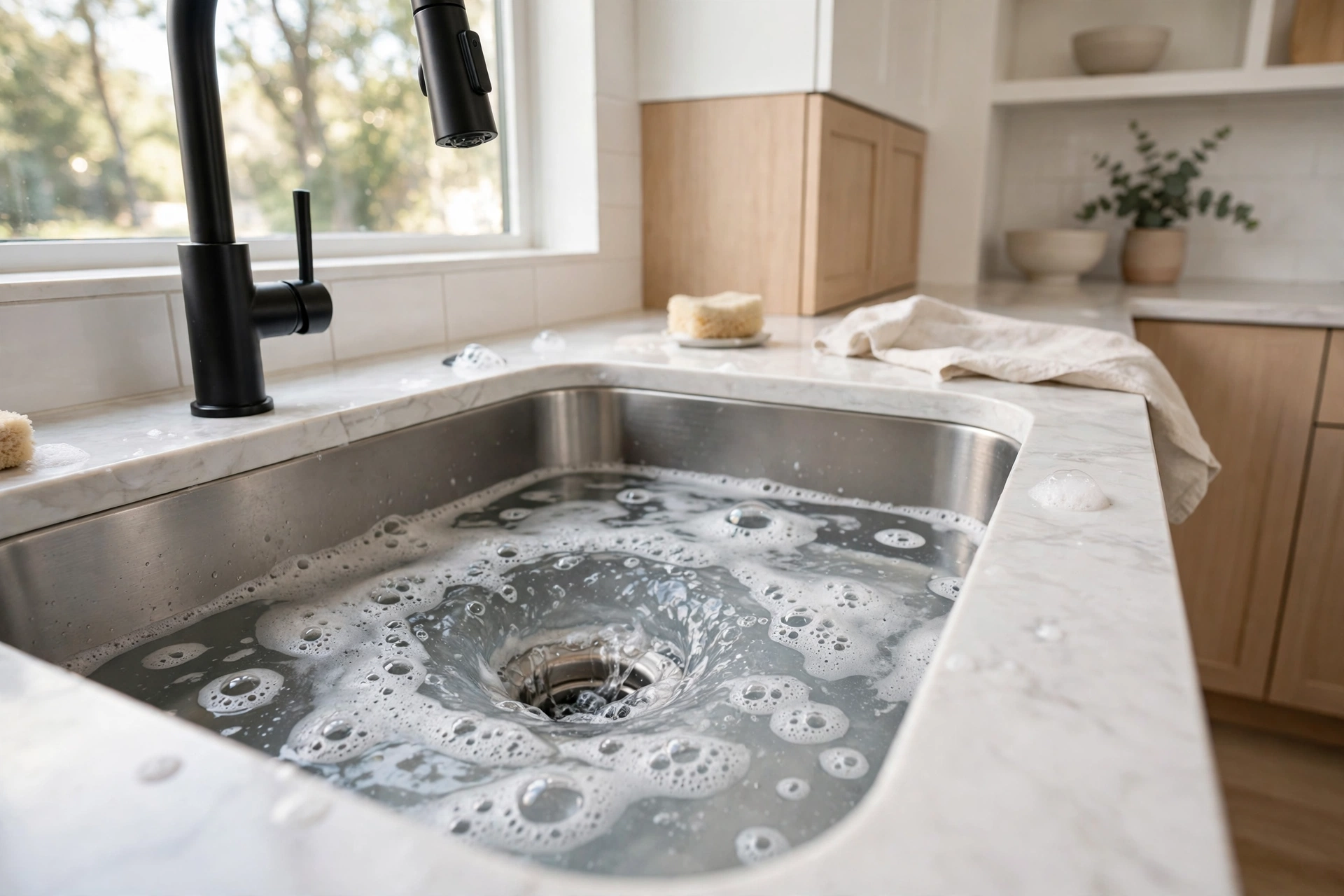
A kitchen drain rarely stops without warning. The clog that finally closes the pipe has usually been building for weeks, and the drain has been giving signs all along: a sink that drains a little slower each week, a gurgle when the water goes down, a smell when the disposal runs, a clog that was cleared last month and is back again. Each sign points to a different stage of the clog, and each one is worth acting on before the drain stops altogether.
This guide walks through the signs in the order they appear: the slow drain, the gurgle, the smell, the recurring clog, and the water that shows up in another fixture. It explains what each sign means, what is happening inside the pipe, and what to do when it appears. A sign acted on early is a smaller job than a blockage cleared late, and a drain that is watched is a drain that rarely stops without warning.
A Slow Drain That Gets Slower
The first warning sign is a drain that empties a little slower each week. A sink that once emptied in seconds now takes longer, and the water level in the basin stays higher for longer after the tap is turned off. The change is gradual, which is why it is easy to miss: the drain still works, only more slowly, and the slowness feels like a small thing until the day the basin fills and stays full.
A slow drain means the pipe is narrowed. Grease from cooking coats the walls a little at a time, food and coffee grounds add to the layer, and scale from the hard water in the Pass gives the grease something to grip. The pipe carries less water each week, and the drain slows in step with the narrowing. A monthly check catches it: run the tap at full flow and watch how fast the basin empties, and note the speed each month.
A slow drain that is ignored becomes a backed-up sink. The coating keeps growing, the pipe keeps narrowing, and one day the water cannot pass at all. Clearing the clog at the slow stage is a smaller job than clearing it at the stopped stage, because the coating is thinner and the blockage is softer. A drain that has been slow for weeks needs a cleaning of the line, not another round of plunging.
Gurgling: Air Trapped Behind a Partial Blockage
Gurgling is the second warning sign. When a drain gurgles as water goes down, air is trapped behind a partial blockage and escaping in bubbles. The gurgle is the sound of water pushing past a narrowed section of pipe, with air caught behind it. A sink that gurgles every time the water runs has a clog forming, even if the water still drains.
Gurgling can also come from another fixture. A kitchen sink that gurgles when a toilet flushes, or a shower that gurgles when the kitchen sink runs, means the blockage sits in a shared drain, and the air is escaping through the nearest fixture. That pattern is worth noting, because it shows the clog is past the kitchen, in a line that serves more than one fixture.
A drain that gurgles and drains slowly together has a clog that is growing, not one that will clear on its own. Each time the clog is partly cleared and left in place, the pipe narrows a little more, and the next clog forms faster. A gurgling drain needs a cable run or a cleaning of the line, and the visit should happen while the drain still flows, not after it stops.
Smells From the Drain
A smell from the kitchen drain is the third warning sign. Food and grease sitting in the pipe break down and give off a smell, and the smell usually comes with a slow drain, because the same buildup that causes the smell also narrows the pipe. A drain that smells when the disposal runs, or when hot water goes down, has buildup coating the pipe walls, and the smell is the buildup, not a separate fault.
A smell can also come from a dry trap. The trap under the sink holds water to block smells from the drain, and in a sink that is not used often, the water in the trap can dry out, especially in Beaumont summers when hot dry air and Santa Ana winds move through the Pass. Running the tap for a short time refills the trap and stops the smell. A smell that returns after the trap is refilled is not a dry trap: it is buildup in the pipe.
A smell from several drains at once is a different sign. Waste water sitting in a blocked main line gives off a smell that reaches every fixture connected to it, and a smell across the house points to a clog in a shared drain or in the sewer line. That pattern needs a visit the same day, because the blockage is further down the system than the kitchen.
A Clog That Keeps Coming Back
A clog that keeps coming back is the fourth warning sign, and it is the clearest of all. A drain cleared once and slow again within weeks still has buildup on its walls, and another short clearing will only repeat the cycle. A drain cleared twice and clogged again in the same place has a clog forming at a point in the pipe, and the cause is at that point: a grease coating, a damaged joint, or a settled section that holds water.
A repeat clog is information about the pipe, not a failure of the last clearing. The pipe walls still carry a coating after a short clearing, so the next clog forms faster. A deeper cleaning of the line, with the walls scraped or jetted clear, is the fix for a coating. A camera look inside the pipe is the fix for a repeat clog in the same place, because it shows whether the cause is the coating or the pipe itself.
A drain that has been cleared three times and clogs again needs a camera, not a fourth clearing. The camera shows the walls of the line, the joints, and any damage, and the repair is planned from what the camera shows. A repeat clog that is ignored becomes a backed-up sink, and a backed-up sink that is cleared halfway becomes a repeat call. The warning sign is the repeat itself.
Water Showing Up in Another Fixture
Water showing up in another fixture is the fifth warning sign, and it is the most urgent of the five. Water rising in the shower when the kitchen sink runs, or water appearing in a tub when the toilet flushes, means the blockage sits in a shared drain or in the sewer line, and the water cannot get past it. The fixture where the water appears is the lowest one in the house, not the fixture that is clogged.
That pattern is the most useful thing a homeowner can report, because it shows where the water is going and where the blockage must sit. If only the kitchen sink is slow and every other fixture drains normally, the clog is in the kitchen branch alone. If several fixtures are slow together, or water appears in a fixture that was not used, the clog is in a shared line and the fix starts further down the system.
Water in another fixture needs attention the same day, because the blockage is further down the line than the kitchen, and more water use will only raise the level in the lowest fixture. Stop running water, note which fixtures are affected and in what order the problem appeared, and call. Call Beaumont Kitchen Sink Pros at (951) 555-0100 and describe the pattern, and we will connect you with an available local crew right away.
Frequently Asked Questions
What are the first signs a kitchen drain is about to clog?
A drain that empties a little slower each week, a gurgle when the water goes down, and a smell when the disposal runs. Each one appears before the drain stops altogether, and each one is worth acting on.
Why does my kitchen drain gurgle?
Air is trapped behind a partial blockage and escaping in bubbles as water pushes past a narrowed section of pipe. A drain that gurgles every time the water runs has a clog forming, even if the water still drains.
Why does my kitchen drain smell?
Food and grease sitting in the pipe break down and give off a smell, and the smell usually comes with a slow drain because the same buildup narrows the pipe. Clearing the clog removes the smell with it.
Why does my kitchen drain keep clogging again?
The pipe walls still carry a coating of grease and scale after a short clearing, so the next clog forms faster. A deeper cleaning of the line, or a camera look where the clog returns in the same place, is the fix.
Why does water come up in my shower when the kitchen sink runs?
The drains join together before they leave the house, so a clog in a shared drain or in the sewer line pushes water back up through the lowest fixture, usually the shower. That pattern points to a blockage past the kitchen.
Related Services
Kitchen Sink Unclogging in These Beaumont Neighborhoods
- Kitchen Sink Unclogging in Three Rings Ranch, Beaumont, CA
- Kitchen Sink Unclogging in Tournament Hills, Beaumont, CA
More from the Blog
- What to Do When Your Kitchen Sink Will Not Drain
- What Causes Kitchen Sink Clogs in Beaumont Homes
- How to Prevent Kitchen Sink Clogs
- Does Homeowners Insurance Cover Drain Cleaning?
Call (951) 555-0100 and we'll connect you with an available local crew right away.
Sink Not Draining in Beaumont?
Describe the clog and get a clear plan for getting it flowing again.
Call (951) 555-0100