Beaumont, CA • Blog
Does Homeowners Insurance Cover Drain Cleaning?
Drain cleaning is usually maintenance, and maintenance is usually not covered by a homeowners policy. Sudden damage from a drain fault is a different question, and the answer sits in the wording of the policy, not in the drain.
24/7 emergency line • Local Beaumont coverage • Clear diagnosis first
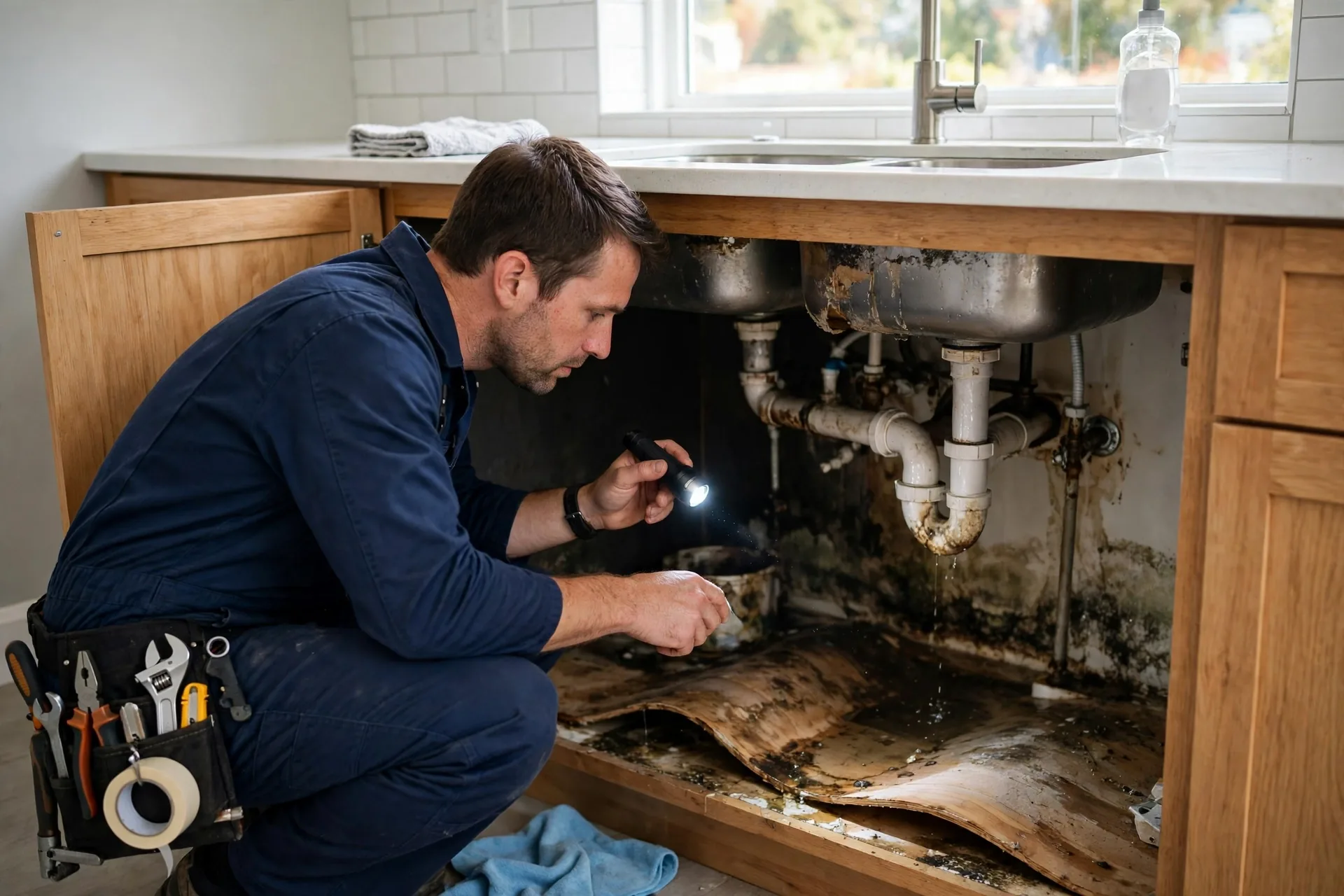
Homeowners ask this question most often after a drain has already caused damage: a leak under the sink has soaked the cabinet, a backed-up drain has left water on the floor, or a sewer backup has come up through the shower. The question is really two questions: is the drain cleaning itself covered, and is the damage the drain caused covered? The answers are different, and both sit in the wording of the policy rather than in the drain.
This guide explains the usual shape of the answer: why drain cleaning is treated as maintenance, what sudden and accidental damage means in a policy, what a sewer backup needs to be covered, and what to do before, during, and after a drain fault so the record is clear. It is general information about how these questions usually work, not advice about any one policy. The policy itself, and the company that wrote it, are the only sources for what a particular home is covered for.
Drain Cleaning Is Usually Maintenance
Drain cleaning is usually treated as maintenance, and maintenance is usually not covered by a homeowners policy. A kitchen drain that slows because grease, food, and scale have built up over months is a drain that has not been cleaned, not a drain that has suffered a sudden event. The policy covers sudden and accidental damage, not the gradual buildup that comes from normal use, and a cleaning that removes that buildup is the homeowner's upkeep, in the same way as changing a filter or clearing a gutter.
That distinction is the reason a claim for drain cleaning on its own is usually turned down. The cleaning is the work of removing what has built up through use, and the buildup is the result of months of cooking and washing up, not a single event on a single day. A policy that covered every cleaning would be a policy that covered upkeep, and homeowners policies are written to cover sudden damage, not upkeep.
The same reasoning applies to a clog that forms gradually. A sink that drains a little slower every month, then stands full one day, has clogged through buildup, not through an event. The clearing is maintenance, even when the day the drain finally stops feels sudden. The date the drain stopped is not the date the clog formed, and the policy looks at the cause, not the day.
Sudden Damage From a Drain Fault: What May Be Covered
Sudden damage from a drain fault is a different question from the cleaning itself. A pipe that bursts, a joint that fails without warning, or a drain that backs up suddenly and leaves water on the floor may be covered as sudden and accidental damage, depending on the policy. The damage is the water on the floor, the soaked cabinet, or the wet wall, not the clog that caused it, and the claim is about the damage rather than the drain.
What matters is whether the damage was sudden and whether the cause was covered. A pipe that cracks with age and leaks slowly for weeks is gradual damage, and gradual damage is usually not covered. A pipe that fails suddenly and soaks a cabinet in a day is sudden damage, and the policy may cover the water damage even though it does not cover the pipe itself. The pipe and the damage it causes are treated separately in many policies, and the wording decides which is which.
A sewer backup that comes up through a shower or floor drain is a common example. The backup itself is a drain fault, and the water damage it causes may be covered, but only where the policy includes sewer backup cover or where it has been added to the policy. Many standard policies do not include it, and the cover has to be added as an extra. A homeowner who has had a sewer backup before, or who lives in an older home along the downtown grid with older drain lines, should check whether that cover is in the policy before the next backup, not after it.
What to Check in Your Policy
The first thing to check is the section on sudden and accidental damage, and the section on exclusions. The exclusions list what the policy does not cover, and gradual damage, wear, and maintenance are usually on that list. The cover for water damage, and the cover for sewer backup, are usually in separate sections, and sewer backup cover is often an extra that has to be added. Reading those sections shows what the policy covers before a claim is made, which is the time the answer matters most.
The second thing to check is the limit and the excess on any water damage cover. A policy may cover water damage up to a limit, with an excess the homeowner pays first, and the limit may be far lower than the cost of repairing a soaked floor and cabinet. Knowing the limit before a fault happens shapes the decision about what to claim and what to pay for directly.
The third thing to check is what the policy asks the homeowner to do after damage happens. Most policies ask the homeowner to stop the damage getting worse, to keep records, and to tell the company promptly. Those steps are covered in the next section, and they matter whether or not a claim is made, because they protect the home and they protect the record.
What to Do Before, During, and After a Drain Fault
Before a drain fault happens, the useful step is to know the policy: whether sewer backup cover is included, what the limit is, and what the company asks for after damage. A camera inspection of an older drain line is also useful, because it shows the condition of the pipe before it fails, and the recording is a record of what the pipe looked like when it was sound. A drain that has been inspected and cleaned on a schedule is a drain that rarely causes sudden damage.
During a drain fault, the first step is to stop the water: taps off, dishwasher off, washing machine off, and no more flushing, because every fixture that drains adds water to a blocked line. Then contain the water that is already in the house: towels, buckets, and containers under the drip. Take photos of the water, the damage, and the drain, with the date, before anything is moved or cleaned. The photos are the record of what happened, and they are far more useful taken at the time than described later.
After the drain is cleared, keep the records together: the photos, the notes of when the problem started and which fixtures were affected, and the record of the visit, including what was found in the drain and what was done. If a claim is made, the company will ask for those records. If no claim is made, the records are still useful, because they show the next technician what was found and when. A drain fault with a clear record is a drain fault that is understood, and a drain fault that is understood is one that can be prevented next time.
Questions to Ask Your Insurer
The questions to ask the insurer are short, and the answers should be written down. Does the policy cover water damage from a sudden drain fault, and what is the limit? Is sewer backup cover included, or does it need to be added, and what does it cover? Is gradual damage, wear, and maintenance excluded, and where is that written? What does the policy ask the homeowner to do after damage happens, and how quickly must the company be told?
Ask also about the pipe itself. Many policies cover the water damage a failed pipe causes but not the pipe, and some cover neither where the pipe failed through age. The distinction matters, because the cost of repairing a soaked cabinet and the cost of replacing a section of pipe are two different costs, and the policy may cover one and not the other. The answer is in the wording, and the wording is worth reading before the fault, not after it.
A final question is about prevention. Some insurers look kindly on a home where the drains have been inspected and cleaned on a schedule, because the record shows the drains were looked after. A camera inspection, a cleaning record, and a note of what was found are all useful to have, whether or not a claim is ever made. Call Beaumont Kitchen Sink Pros at (951) 555-0100 when a drain fault causes damage, and we will connect you with an available local crew right away.
Frequently Asked Questions
Does homeowners insurance cover drain cleaning?
Usually not. Drain cleaning is treated as maintenance, because it removes buildup from normal use, and homeowners policies usually cover sudden and accidental damage, not upkeep. The policy wording decides, and the policy itself is the only source for a particular home.
Is water damage from a backed-up drain covered?
It may be, where the damage was sudden and the policy covers it. The damage is the water on the floor or the soaked cabinet, not the clog that caused it, and the claim is about the damage rather than the drain.
Is sewer backup covered by a standard homeowners policy?
Often not. Many standard policies do not include sewer backup cover, and it has to be added as an extra. Check whether it is in the policy before the next backup, not after it.
What is the difference between sudden damage and gradual damage?
Sudden damage happens in a single event, such as a pipe failing and soaking a cabinet in a day. Gradual damage builds over weeks, such as a pipe leaking slowly or a drain narrowing through buildup, and gradual damage is usually not covered.
What should I do after a drain fault causes damage?
Stop the water, contain what is already in the house, take dated photos of the water and the damage before anything is moved, and keep the notes and the record of the visit together. Tell the insurer promptly, as the policy asks.
Related Services
Kitchen Sink Unclogging in These Beaumont Neighborhoods
- Kitchen Sink Unclogging in Cherry Valley, Beaumont, CA
- Kitchen Sink Unclogging in Highland Springs, Beaumont, CA
More from the Blog
- What to Do When Your Kitchen Sink Will Not Drain
- What Causes Kitchen Sink Clogs in Beaumont Homes
- How to Prevent Kitchen Sink Clogs
- Warning Signs Your Kitchen Drain Is About to Clog
Call (951) 555-0100 and we'll connect you with an available local crew right away.
Sink Not Draining in Beaumont?
Describe the clog and get a clear plan for getting it flowing again.
Call (951) 555-0100